In recent years, we’ve witnessed a powerful shift — South Asian women have been increasingly leading the charge in holding brands accountable. Whether it’s through social media activism, grassroots movements, or conscious consumer choices, South Asian women are using their voices to drive change. But why is this happening? And how does it tie into the larger, ongoing struggles such as the conflict in Palestine and Israel?
A History of Advocacy and Resistance
South Asian women come from a history rich in activism and resistance. From the independence movements against British colonial rule to the ongoing fight for women’s rights and representation, these women have been on the frontlines of social change for generations. They’ve had to navigate patriarchal systems, cultural stereotypes, and, in many cases, the burden of immigrant life in the diaspora. It’s no wonder they bring that same energy to holding brands accountable.
But beyond their personal struggles, South Asian women are deeply empathetic to global issues. This empathy has driven many to boycott brands that are unsourceful, unethical, or that support unjust political causes. One of the most prominent examples today is the boycott of brands linked to the Israel-Palestine conflict.
The Israel-Palestine Connection
The conflict between Israel and Palestine has long been a global flashpoint, and for many South Asian women, it’s not just a political issue—it’s personal. There are shared histories of colonialism, occupation, and displacement that resonate with many South Asians, particularly those whose families experienced partition or other forms of state-led violence. The empathy runs deep, and the desire for justice is a driving force behind their activism.
For South Asian women, the Palestine-Israel conflict represents a broader struggle for human rights, and they’re aware of how economic power can influence political outcomes. This is why they’ve become leaders in boycotting brands and corporations that are seen as complicit in human rights violations or unsourceful practices, particularly those benefiting from or supporting the occupation in Palestine.

Conscious Consumerism as a Form of Resistance
In a world driven by consumption, choosing where and how to spend money has become a form of activism. South Asian women are increasingly recognizing the impact of their collective purchasing power. They understand that their spending choices can either support a system that exploits marginalized communities or stand against it. Boycotting unsourceful brands is a natural extension of their values — values that emphasize justice, equality, and compassion.
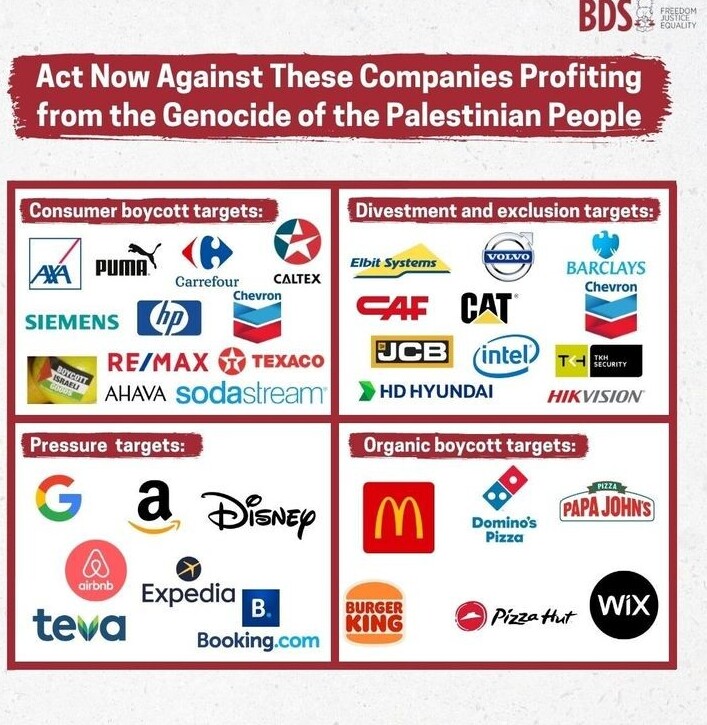
Many South Asian women have rallied around movements like the Boycott, Divestment, Sanctions (BDS) campaign, which seeks to pressure companies and governments to end their support for the Israeli occupation. This movement aligns with their broader goals of ensuring that their money doesn’t support systems of oppression — whether that’s unfair labor practices, environmental degradation, or human rights violations.
The Role of Social Media
Social media has played an enormous role in amplifying this movement. Platforms like Instagram, Twitter, and TikTok have become powerful tools for South Asian women to educate, organize, and mobilize. They share information about unethical practices, call out brands, and offer alternatives that align with their values. It’s also a space where they build solidarity with other marginalized communities, including Palestinians, whose voices are often silenced in mainstream media.
A New Wave of Accountability
Brands can no longer hide behind glossy marketing campaigns. South Asian women, with their sharp critical lenses, are demanding transparency. They’re asking tough questions: Where are your products made? Who profits from this? What are your company’s values?
And it’s not just about boycotting — it’s about supporting brands that do good. Many South Asian women are choosing to put their money into businesses that are ethical, sustainable, and socially responsible. They’re proving that consumerism can be a tool for social change, especially when backed by the moral clarity that many of them bring from their personal, cultural, and political experiences.
A Growing Movement for Global Justice
What makes South Asian women’s leadership in this movement so powerful is its global perspective. Many have roots in countries that were once colonized, where the impact of imperialism is still felt today. This perspective often shapes their understanding of other struggles, including the fight for Palestinian liberation.
By boycotting brands linked to the Israel-Palestine conflict or unsourceful practices, South Asian women are participating in a global movement for justice. They see the interconnectedness of struggles across the world — from Palestine to Kashmir, from Gaza to India — and they recognize that supporting one struggle is a step toward liberation for all.
What Comes Next?
This growing wave of activism led by South Asian women is a reflection of a larger societal shift towards conscious consumerism. It’s a reminder that every dollar spent is a vote cast for the kind of world we want to live in. For many, that world is one where human rights, dignity, and justice come before profit.
As the Israel-Palestine conflict continues to unfold, we can expect to see even more South Asian women stepping up, not just as consumers but as leaders and advocates for global justice. They are refusing to be passive participants in systems of oppression, and their boycotts of unsourceful brands are just one example of how they’re using their voices to push for a better, more just world.
No Responses