Amplifying South Asian Women’s Voices in Boycotting Brands that Support Israel
In the face of ongoing injustices and human rights violations in Palestine, South Asian women are leveraging social media to amplify their voices and advocate for a global movement of ethical consumerism. One significant form of activism gaining momentum is the boycott of brands that support Israel’s occupation of Palestinian land or profit from the ongoing conflict. For many South Asian women, social media offers a platform to mobilize, educate, and pressure brands to align with the principles of justice and human rights—particularly in supporting the Palestinian cause.
Historical Solidarity Between South Asians and Palestinians
The struggle for Palestinian rights resonates deeply with many in the South Asian community due to shared experiences of colonization, occupation, and struggles for independence. South Asian women, in particular, have drawn parallels between the fight for Palestine and their own historical and current struggles against oppression and marginalization. The connection is not just political but deeply rooted in a shared sense of justice and resistance to imperialist and colonial forces.
As a result, South Asian women have become vocal advocates for Palestinian rights, leading campaigns that call for the boycott of brands and companies that are seen as complicit in Israel’s occupation or profiteering from the conflict.
Boycotting Brands that Support Israel
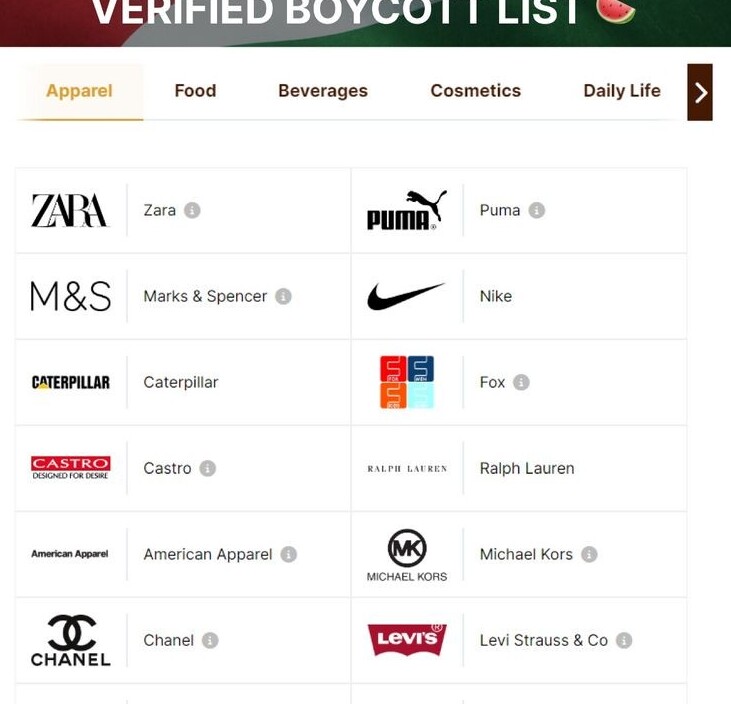
Several multinational brands are tied to the Israeli economy and the occupation of Palestinian land, either through direct investments, supply chains, or services provided to the Israeli government and military. South Asian women, alongside global movements like the Boycott, Divestment, and Sanctions (BDS) campaign, are leading efforts to boycott these brands and companies. Social media has been an essential tool in spreading awareness, educating consumers, and rallying support for Palestine.
Key Brands Targeted by Boycott Movements
- Puma
As mentioned earlier, Puma has been under scrutiny for its sponsorship of the Israel Football Association, which includes teams based in illegal Israeli settlements. Palestinian activists, including South Asian women on social media, have used platforms like Twitter and Instagram to promote the #BoycottPuma campaign. This campaign highlights how Puma’s sponsorship effectively legitimizes Israel’s settlement expansion, which violates international law. By sharing viral posts, infographics, and videos, South Asian women play a vital role in mobilizing consumers to pressure Puma into severing its ties with Israeli settlements. - HP (Hewlett-Packard)
HP is a key player in providing technological infrastructure to the Israeli government and military, which uses surveillance technologies to monitor Palestinians. HP’s involvement in supplying biometric systems used at Israeli military checkpoints has made it a target for boycott campaigns. South Asian women have joined forces with global activists to call out HP on social media platforms, using hashtags like #BoycottHP to raise awareness and encourage ethical consumerism. These efforts focus on the fact that consumer dollars should not support companies complicit in the occupation. - Coca-Cola
Coca-Cola has been criticized for its economic ties to Israel, particularly through a major Israeli bottling company that operates in the country and is involved in Israeli settlements. South Asian women, passionate about the Palestinian cause, have promoted the boycott of Coca-Cola products through Instagram, TikTok, and Twitter, spreading awareness about the company’s indirect role in supporting Israeli policies. By rallying their communities and leveraging influencers, they call on others to stop buying Coca-Cola products until the brand takes a firm stance against Israeli occupation. - Sabra Hummus
Sabra, a popular hummus brand, is co-owned by an Israeli company that has been linked to support for the Israeli military. South Asian women have been active in promoting alternatives to Sabra through social media, encouraging their followers to choose brands that do not profit from the occupation of Palestinian land. Campaigns such as #BoycottSabra often go viral, reminding consumers that their purchasing decisions have political weight.
Social Media as a Tool for Collective Action
Social media has given South Asian women an unprecedented platform to engage in these boycott movements, utilizing their networks to spread awareness, educate others, and influence consumer behavior. Hashtags such as #BoycottIsrael, #StandWithPalestine, and #BDS have gained significant traction, driven by influencers, activists, and everyday users who are passionate about holding brands accountable.
Through posts, stories, and viral videos, South Asian women are able to educate others about the human rights violations occurring in Palestine and the complicity of certain brands. They create accessible content—such as graphics that explain a brand’s involvement in Israeli settlements or infographics that outline the importance of ethical consumerism—making it easier for others to join the movement.
Using Influencer Power
South Asian women influencers, especially on platforms like Instagram and TikTok, have played a crucial role in amplifying the boycott campaigns. These influencers have large followings that extend beyond South Asian communities, giving them the power to reach a global audience. By using their platforms to speak out against brands that support Israel, they help make the boycott movement more mainstream.
For example, influencers have started initiatives encouraging their followers to switch from brands complicit in the occupation to local, ethical alternatives. This approach not only supports Palestine but also uplifts small businesses, many of which are owned by women of color.
Cultural Impact and Awareness Building
South Asian women are also using the power of their cultural presence to influence these boycotts. For example, by bringing in parallels between the occupation of Palestine and South Asian histories of colonization, they tap into a collective memory of resistance that resonates with their audiences. This cultural context adds emotional weight to the boycott movements, framing the support for Palestine as a moral and ethical imperative.
Posts that compare the oppression of Palestinians to the histories of colonial rule in South Asia, or that draw links between the struggles of Palestinians and the fight against racism, casteism, and sexism in South Asia, add layers of meaning to the boycott campaigns. These connections help more people understand the importance of supporting Palestine and pressuring brands to do the same.
Consumer Power as a Tool for Change
South Asian women understand the power of the collective consumer. Boycotting a brand that supports Israel not only impacts that brand’s bottom line but also sends a message to the global marketplace: companies that profit from or support injustice will face public backlash and lose consumer trust. As the movement grows, these brands are forced to confront the ethical implications of their business practices.
Conclusion
The rise of social media has empowered South Asian women to take a leading role in boycotting brands that support Israel’s occupation of Palestine. By harnessing the reach of platforms like Instagram, Twitter, and TikTok, these women are educating the public, mobilizing communities, and holding corporations accountable for their complicity in human rights violations.
The power of collective action through social media cannot be understated. South Asian women, through their activism, are making it clear that consumers hold immense power—and that power can be wielded to stand in solidarity with Palestine. In this digital age, every post, hashtag, and boycott adds pressure, pushing the world closer to justice for Palestinians.
No Responses