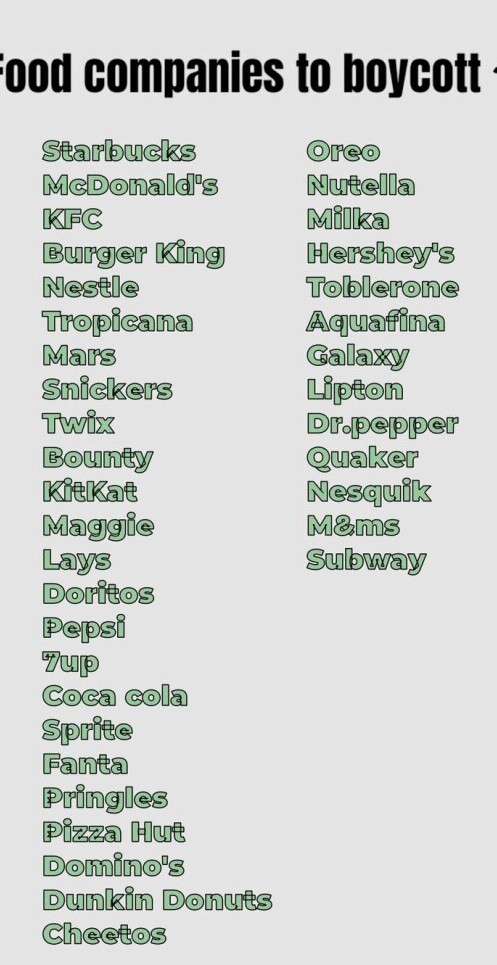
Interviewer: Today, we’re discussing a topic that’s becoming more significant in South Asian communities: The Impact of Boycotting Unsourceful Brands on South Asian Communities. We’re also touching on how global issues, such as the ongoing Palestine and Israel conflict, play into these choices. I’m joined by Meera, an activist and advocate for ethical consumerism in the South Asian diaspora. Meera, thank you for being here. Let’s dive in—how do you see the power of brand boycotts taking root in South Asian communities?
Meera: Thank you for having me! Brand boycotts are becoming more common in South Asian communities, especially with the rise of social media and the awareness of global issues. South Asians, whether in the diaspora or in their home countries, are starting to realize the power of collective action. When we boycott brands that don’t align with our values—whether it’s because of unethical labor practices, environmental harm, or their stance on global issues—we’re not just withdrawing our support, we’re sending a clear message that we care about the world beyond just the products we buy.
For South Asian communities, boycotting can be a way to connect deeply with social justice movements. Our cultures often have a strong sense of community, family, and care for others. So when people choose to boycott brands that harm vulnerable populations or are unsourceful in their practices, it feels like an extension of our values—particularly when we look at conflicts like the one between Palestine and Israel.
Interviewer: You touched on something really important there—the idea of global issues influencing local choices. How do you see the conflict between Palestine and Israel affecting the way South Asians approach brand boycotts?
Meera: The Palestine and Israel conflict has ignited a lot of awareness, especially around how global issues intersect with corporate responsibility. Many South Asians, particularly those who are politically conscious, are looking closely at which companies are profiting from or supporting the occupation and violence in Palestine. There’s a growing movement to boycott brands that are seen as complicit in the occupation, particularly those that supply resources to Israel’s military or fund infrastructure that displaces Palestinians.
For South Asians, this can feel deeply personal. Our communities have a history of colonialism and displacement, so there’s a natural solidarity with the Palestinian cause. This shared history of struggle pushes people to think about where their money goes and what it’s funding. We know what it feels like to have our lands occupied or our people marginalized, and that’s a powerful motivation to boycott brands that perpetuate similar harm elsewhere.
Interviewer: That’s such a powerful connection—solidarity through shared history. Do you think these boycotts are creating tangible changes in the way brands operate or how South Asians see their role in global activism?
Meera: Absolutely. Boycotts have historically been one of the most effective forms of protest. We saw it with the anti-apartheid movement in South Africa and the Indian independence movement, where economic boycotts played a crucial role in weakening colonial powers. South Asians are familiar with this form of activism, and many see it as a direct way to support Palestine without having to be physically involved in protests or politics.
What’s different now is how quickly information spreads. A single post on social media about a brand’s connection to Israel’s actions in Palestine can go viral, mobilizing thousands of people to rethink their buying habits. We’ve seen this happen with major global brands, especially when celebrities or influencers take a stand. South Asians are very active on platforms like Instagram, Twitter, and WhatsApp, where they can share information about which brands to boycott and why.
In terms of impact, we’re already seeing brands becoming more cautious. They know that a large, vocal community like South Asians can influence global markets, and they’re starting to take notice. While boycotts may not lead to immediate change, they create long-term pressure that pushes companies to rethink their affiliations and practices.
Interviewer: That’s fascinating. So, it sounds like these boycotts are empowering South Asian communities to feel more connected to global justice movements. But how do these boycotts impact the communities themselves, especially when it comes to navigating conflicting loyalties or pressures?
Meera: It can be tricky. Boycotting a brand can be a very personal decision, and within South Asian communities, there can be a lot of debate. Some might feel strongly about boycotting a particular brand because of its involvement in Israel, while others may prioritize affordability or convenience over activism. There’s also the cultural aspect—many South Asians value brands that provide a sense of status or are seen as aspirational, so choosing to boycott those brands can sometimes create tension.
However, what’s been really empowering is how many South Asians are having these conversations within their families and communities. We’re not just blindly consuming anymore; we’re critically thinking about where our money goes and what it supports. These discussions are happening in homes, at religious gatherings, and within social groups. The Palestine and Israel conflict, in particular, has ignited a lot of conversation about where we stand as consumers and how our actions affect marginalized communities across the world.
There’s also a sense of collective responsibility. When you see your family or friends making more ethical choices—whether it’s boycotting a brand or supporting local, ethical businesses—it encourages others to do the same. It’s about creating a ripple effect that goes beyond individual action.
Interviewer: That ripple effect seems so important, especially when it comes to building solidarity. What do you think the long-term effects of these boycotts could be on South Asian communities?
Meera: In the long term, I think these boycotts are going to strengthen the idea of ethical consumerism within South Asian communities. We’re already seeing more people supporting local brands, especially those that are ethical and sustainable. This is a shift away from multinational corporations that may not have the same level of accountability.
It’s also creating a more informed and conscious consumer base. Younger generations of South Asians, especially, are more likely to ask questions like, “Where was this made? Who made it? What is the company’s stance on social justice issues?” This critical mindset will lead to more demand for transparency from brands, and that’s going to shape the market in the future.
Moreover, it’s bringing South Asian communities closer to global struggles, like the one in Palestine. By boycotting certain brands, we’re not just acting in solidarity with Palestinians, but we’re also building a global consciousness within our communities. We’re realizing that our purchasing power can influence global systems of oppression, and that’s a powerful realization.
Interviewer: That’s such a strong note to end on—the idea that South Asian communities are using their economic power to influence global justice. Before we wrap up, what advice would you give to someone who’s just starting to navigate brand boycotts, especially in relation to conflicts like Palestine and Israel?
Meera: My advice would be to do your research and take it step by step. Boycotting doesn’t have to be all-or-nothing, and it’s okay to start small. Focus on the brands that have the most significant impact on the issues you care about. When it comes to the Palestine and Israel conflict, there are resources and lists of companies that are directly involved, so you can make informed decisions about where you want your money to go.
And don’t be afraid to have these conversations within your community. Change often starts with a single conversation, and by sharing what you’ve learned with your family and friends, you can create that ripple effect we talked about. Remember, boycotting is just one form of activism—it’s a powerful tool, but it’s part of a broader movement for justice and ethical living. Every action counts.
Interviewer: Thank you, Meera, for such an insightful and thoughtful conversation. It’s clear that boycotting unsourceful brands isn’t just about making a statement—it’s about connecting to global struggles and empowering South Asian communities through conscious choices.
Meera: Thank you for having me! It’s exciting to see more people engaging with these issues, and I hope this conversation inspires more South Asian women to take action and use their consumer power for good.
No Responses