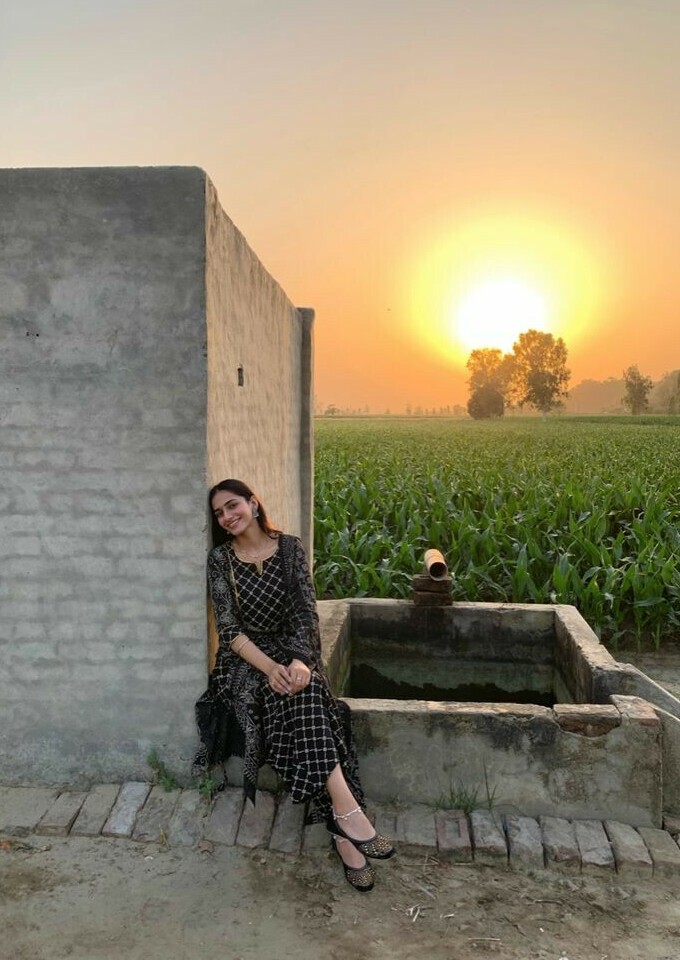
Stree ko dard nahi hota,” they would say. A woman doesn’t feel pain. It was a phrase Ikroor had heard all her life, tossed around casually, as if it were the truth. But Ikroor knew better. She knew that women felt pain—intense, searing pain that cut deeper than any physical wound. But she also knew something else, something far more powerful: that women, despite this pain, possessed a strength unlike any other.
Ikroor’s story began in a small village nestled in the heart of Punjab, where tradition ran deep and expectations were set in stone. From a young age, Ikroor was taught that a woman’s worth lay in her endurance, in her ability to bear the weight of the world without complaint. “Stree ko dard nahi hota,” her mother would say as she bandaged her wounds after a day of hard labor. It was as if they believed that by repeating these words, they could make them true.
But Ikroor felt the pain. She felt it in the blisters on her hands from working in the fields, in the ache in her back after hours of carrying water, in the sharp sting of insults hurled at her when she dared to speak out of turn. She felt it in the quiet tears she shed at night, alone in the darkness, where no one could see her break. But she also felt something else—a simmering anger, a fire that grew stronger with each injustice, each time she was told to stay silent, to endure.
Ikroor’s breaking point came when she witnessed a neighbor, a young woman barely older than herself, being beaten by her husband in the middle of the street. The villagers watched in silence, some with pity, others with indifference, but no one stepped forward to help. “Stree ko dard nahi hota,” they muttered among themselves, as if to justify their inaction.
But Ikroor could no longer stand by and accept this lie. She knew that this pain was real, that it wasn’t something to be dismissed or ignored. She knew that women like her neighbor—and like herself—deserved better. They deserved to live without fear, without pain, and without the constant expectation that they must endure suffering in silence.
With her heart pounding in her chest, Ikroor did something that shocked the entire village. She stepped forward, placing herself between the man and his wife. “Bas!” she shouted, her voice trembling but fierce. “Stree ko dard hota hai. Aur ab aur bardasht nahi karegi!” A woman does feel pain. And she will endure it no more!
The man stared at her, stunned into silence. The villagers, too, were shocked, their whispered comments falling away as they watched this young woman defy centuries of tradition with just a few words. But Ikroor didn’t back down. She refused to let fear control her any longer.
With that one act of defiance, Ikroor ignited a spark that began to spread through the village. Other women, inspired by her courage, started to speak out about their own pain, their own struggles. They formed a group, meeting in secret at first, then openly, as their numbers grew. They shared their stories, their fears, and their hopes, finding strength in each other. They learned self-defense, they demanded justice, and they began to challenge the very traditions that had kept them in chains for so long.
The movement grew beyond the village, spreading to other parts of Punjab and beyond. Women everywhere were waking up to their own power, rejecting the idea that they had to suffer in silence. They started to confront the men who had oppressed them, the systems that had failed them, and the cultural norms that had kept them down. They fought for their rights, for their dignity, and for a future where they could live without fear.
Ikroor became a symbol of this movement, her story resonating with women across the country. She spoke at rallies, her voice steady and strong as she told her story, not just of pain, but of resilience and hope. She reminded women that they were not alone, that their pain was real and valid, but that they also had the power to overcome it. “Stree ko dard hota hai,” she would say, “par ussi dard mein uski taqat chhupi hai.” A woman does feel pain, but in that pain lies her strength.
Ikroor’s journey wasn’t easy. She faced backlash, threats, and countless challenges. But she never wavered in her belief that women deserved better. She knew that change wouldn’t come overnight, but she also knew that every step forward, no matter how small, was a victory. And with each victory, the idea that “Stree ko dard nahi hota” lost its power, replaced by a new truth: that women are powerful, that they are strong, and that they will no longer be silent.
The lesson in Ikroor’s story is one of resilience and empowerment. It’s a reminder that pain, though real, is not something to be ashamed of. It’s a part of life, but it’s also a source of strength. Women like Ikroor show us that acknowledging our pain is not a sign of weakness, but of courage. And in facing that pain, in speaking out and standing up, we find the power to change not just our own lives, but the world around us.
“Stree ko dard hota hai”—a woman does feel pain. But she also possesses the strength to rise above it, to fight back, and to create a future where she can live with dignity, respect, and freedom. Ikroor’s story is a testament to the power of women everywhere, a call to action for us all to challenge the lies that have held us back, and to embrace the truth of our own strength.
No Responses