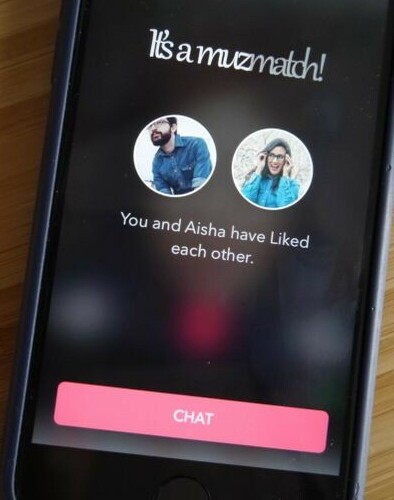
“Meri Bhi Sun Lo: A Muzzmatch Campaign”
Imagine this: a young South Asian woman, sitting in front of her mirror, applying the final touches of makeup with practiced precision. Her hands move with a mix of confidence and hesitation, as if she’s done this a thousand times but still feels the weight of every stroke. This is the opening scene of the Muzzmatch campaign, “Meri Bhi Sun Lo” (Listen to Me Too), which captures the subtle yet profound struggles that many South Asian girls face when it comes to marriage.
As the advert unfolds, we see our protagonist, Aisha, navigating the complex and often overwhelming world of arranged marriages. The scenes shift rapidly—one moment, she’s meeting a potential groom’s family, the next, she’s being scrutinized for her appearance, her cooking skills, her career choices, even her complexion. The questions and comments come at her like rapid-fire: “Do you know how to make biryani?” “What are your career plans after marriage?” “You’re a bit dark-skinned, aren’t you?”
Each question is like a tick mark on an invisible checklist—boxes that she’s expected to fit into, all to meet the expectations of the groom’s family. They want her to be traditional yet modern, independent yet compliant, beautiful but not too bold. It’s a balancing act that no one could ever truly perfect, yet it’s what’s demanded of her.
The advert cleverly juxtaposes these scenes with moments of Aisha alone in her room, staring at her reflection. You can see the exhaustion in her eyes, the strain of trying to be everything for everyone, yet feeling like she’s losing herself in the process. This is where the campaign hits hardest—it’s not just about the physical or societal expectations; it’s about the toll this takes on a woman’s mental health.
The pressure to conform, to please, to be the “perfect bride” can lead to anxiety, low self-esteem, and a feeling of worthlessness. Aisha, like many South Asian women, finds herself questioning her own value, not based on who she is, but on how well she can fit into someone else’s idea of what a wife should be. The campaign highlights this struggle, showing that it’s not just about marriage—it’s about identity, self-respect, and mental well-being.
But “Meri Bhi Sun Lo” isn’t just a depiction of struggles; it’s a call to action. The advert ends with a powerful scene: Aisha, now standing tall, looks directly into the camera and speaks. Her voice is firm, unyielding, and full of resolve. She says, “It’s time to listen to me too.” It’s a message to the world, to families, and to the system that often stifles women’s voices in the process of marriage negotiations.
The campaign fights against the idea that a woman’s worth is tied to how well she can meet these rigid expectations. It advocates for a change in perspective—one where the bride’s voice, desires, and mental health are given as much importance as the groom’s family’s checklist. It’s about breaking free from the boxes and allowing women to be seen as whole individuals, with their own dreams, fears, and aspirations.
“Meri Bhi Sun Lo” is not just an advert; it’s a movement. It’s an invitation to start a conversation that has been long overdue in South Asian communities. It challenges the status quo and encourages women to stand up and assert their worth, not just as brides but as human beings. And in doing so, it hopes to create a world where marriage is a partnership of equals, built on mutual respect and understanding, not on ticking off boxes on a list.
In essence, this Muzzmatch campaign is fighting to dismantle the traditional pressures that confine South Asian women, advocating for a future where every Aisha can walk into a marriage not as someone molded to fit another’s expectations, but as her true, authentic self.
No Responses