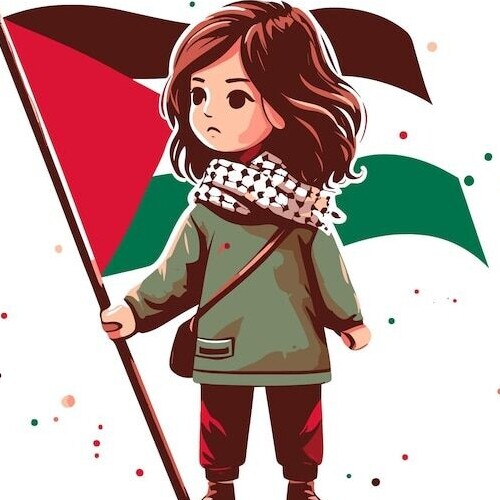
South Asian women are leveraging social media as a powerful tool to raise awareness and support the Palestinian cause, using their platforms to amplify voices, share resources, and mobilize their communities for activism. By creating a digital network of solidarity, they are connecting local struggles with global movements, making social media a significant medium for their activism.
Here’s how South Asian women are using social media to support Palestine:
1. Amplifying Palestinian Voices
One of the most important ways South Asian women use social media is by amplifying the voices of Palestinians themselves. They share personal stories, videos, and testimonies from Palestinians living under occupation, ensuring that their experiences are heard beyond mainstream media channels. Platforms like Instagram, Twitter, and TikTok have enabled South Asian women to repost content directly from Palestinian activists, journalists, and civilians, bridging the gap between different global communities.
By focusing on Palestinian perspectives, South Asian women ensure that their activism centers those who are directly affected by the occupation. This amplification counters the erasure of Palestinian voices that often occurs in Western media narratives.
2. Educational Campaigns
South Asian women are using social media to educate their followers about the history of the Israeli-Palestinian conflict, debunk myths, and highlight key issues such as the apartheid system, illegal settlements, and the humanitarian crisis in Gaza. They often share infographics, articles, and videos explaining complex political and historical contexts in an easily digestible manner.
For example, many create threads on Twitter or post Instagram Stories that simplify the legal and political frameworks of occupation, making the information accessible to a wider audience. These educational campaigns empower others to understand the nuances of the conflict and equip them with the knowledge to support Palestinian rights effectively.
3. Raising Awareness Through Visual Storytelling
South Asian women have been particularly adept at using visual storytelling on platforms like Instagram and TikTok. Short videos, graphics, and photos are used to convey the realities of life in Palestine, humanizing the conflict and drawing attention to the impact on families, children, and communities.
Through reels, IGTV, and TikTok videos, they visually highlight protests, cultural resilience, and daily life under occupation. This form of activism personalizes the conflict and resonates deeply with younger audiences who consume content visually. South Asian women are also creating artwork, posters, and designs that showcase solidarity with Palestine, merging activism with creativity.
4. Organizing Digital Protests and Campaigns
During times of crisis, South Asian women use social media to quickly organize and mobilize for online protests and campaigns. Hashtags such as #FreePalestine, #SaveSheikhJarrah, and #GazaUnderAttack have trended globally thanks in part to their consistent and coordinated efforts.
They have also participated in broader global movements such as the Boycott, Divestment, and Sanctions (BDS) movement, calling for boycotts of Israeli products and companies that support the occupation. Using social media, South Asian women have rallied their followers to join in economic boycotts and petition governments to stop supporting Israeli apartheid.
These digital protests create momentum, putting pressure on governments, institutions, and corporations to reconsider their stance on Israel’s policies. They also allow for the rapid spread of information about rallies, protests, and other forms of action that can be taken locally or internationally.
5. Sharing Resources and Petitions
South Asian women are adept at sharing petitions, fundraisers, and donation links via social media, helping direct aid to Palestinians and pressuring policymakers to take action. Platforms like Instagram Stories or Twitter are frequently used to share links to petitions calling for governmental action, such as ending military aid to Israel or recognizing Palestinian statehood.
Women often create and share Google Docs filled with resources, including reading materials, ways to contact politicians, donation platforms, and other activist tools. This quick and easy dissemination of resources allows people across the world to contribute to the Palestinian cause, even if they are not on the ground.
6. Challenging Media Narratives
Mainstream media outlets often present biased or incomplete portrayals of the Israeli-Palestinian conflict, focusing disproportionately on Israeli narratives. South Asian women use social media to challenge these dominant narratives, providing alternative perspectives and exposing the biases in coverage.
Through Instagram Stories, Twitter threads, and Facebook posts, they critique how major news outlets report the conflict, encouraging followers to seek out independent or Palestinian-run news sources. This work is crucial in reshaping public perception and encouraging more accurate representation of Palestinian struggles.
7. Building Global Solidarity Networks
South Asian women are using social media to build international solidarity networks, connecting movements for Palestinian liberation with other struggles against oppression, such as the Black Lives Matter movement or anti-caste activism. By drawing connections between colonialism, racism, and state violence, they emphasize the global nature of the fight for justice.
These women engage in cross-cultural dialogues, collaborating with activists from various parts of the world to create a unified front against oppression. Hashtags, webinars, and Instagram Lives serve as bridges for these conversations, fostering an inclusive and intersectional approach to activism.
8. Combating Islamophobia
In their support for Palestine, South Asian women often confront Islamophobic rhetoric that appears both online and in real-life discourse surrounding the conflict. They use their platforms to call out anti-Muslim sentiment, ensuring that the Palestinian cause is not silenced by Islamophobia or fearmongering.
This is particularly important for South Asian women in countries with large Muslim populations or within the diaspora, where issues of Islamophobia and Palestinian solidarity are deeply intertwined. By standing against Islamophobia, they help create a safer space for advocacy on Palestine and other issues affecting Muslim communities.
9. Humanizing Resistance and Building Empathy
A significant part of South Asian women’s activism online is humanizing Palestinian resistance and building empathy for their plight. By sharing personal stories of Palestinian families, the destruction of homes, and the resilience of Palestinian women and children, they aim to cultivate global empathy and support for the cause.
This human-centered approach to activism moves beyond political discourse and connects audiences emotionally, making it harder to ignore the urgency of the Palestinian situation. South Asian women use social media to foster a sense of shared humanity, which is central to mobilizing global support.
Conclusion: A Powerful Digital Force
Social media has enabled South Asian women to become powerful voices for Palestinian solidarity, bridging geographical, cultural, and political divides. By using their platforms to educate, organize, and mobilize, they have created a ripple effect of awareness and action, connecting local struggles for justice with the global movement for Palestinian liberation. Their courage, creativity, and resilience continue to shape the conversation on Palestine, demonstrating the vital role social media plays in modern-day activism.
No Responses