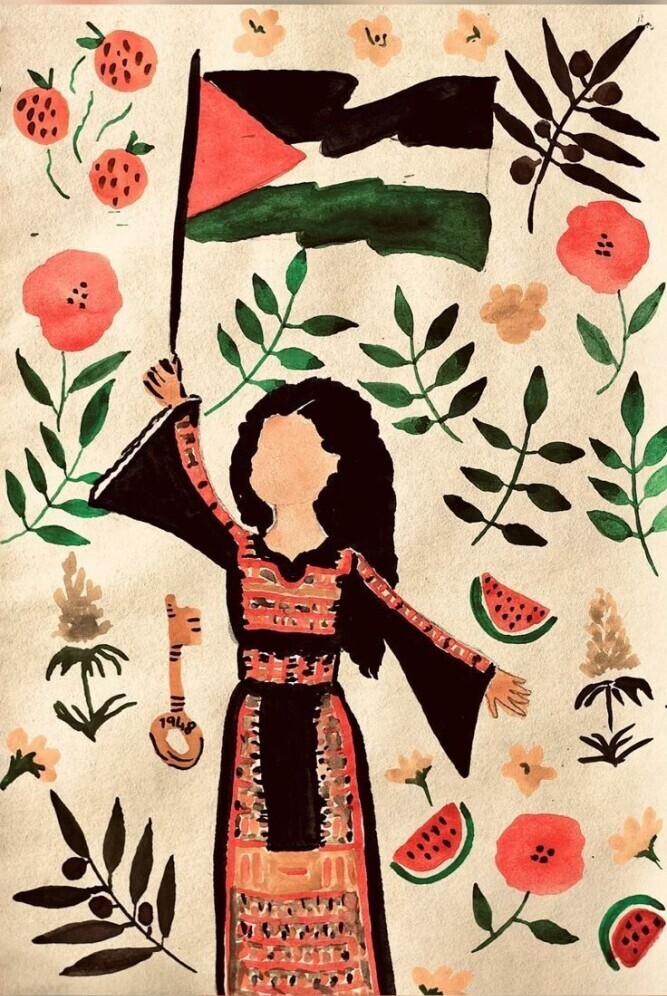
Artwork by Giada. Link: https://nz.pinterest.com/pin/3096293489341253/
South Asian women are increasingly becoming prominent voices in mobilizing for Palestinian solidarity, intertwining their advocacy with a broader fight for global justice. Their involvement stems from a shared understanding of colonialism, systemic oppression, and the struggle for human rights, all of which resonate deeply within the South Asian context.
1. Historical and Cultural Ties
South Asia has its own history of colonization and resistance, which creates a natural alignment with the Palestinian cause. The shared experience of British imperialism has made many South Asian activists acutely aware of the impact of occupation, displacement, and state violence. This historical context fuels a sense of solidarity, as both Palestinians and South Asians have long histories of resisting foreign domination and reclaiming autonomy.
2. Intersectional Activism
South Asian women often draw on intersectionality in their activism, connecting Palestinian struggles to wider issues of gender, race, and class. Many view the Palestinian cause as part of a global movement against imperialism, racism, and patriarchy. This approach not only centers Palestine but also calls attention to other marginalized communities around the world, including within South Asia.
3. The Role of Digital Platforms
Social media has played a crucial role in mobilizing South Asian women for Palestinian solidarity. Platforms like Instagram, Twitter, and TikTok allow women to amplify the voices of Palestinians, spread awareness, and engage in virtual activism. South Asian women are sharing infographics, organizing webinars, and collaborating with Palestinian activists to raise awareness about the occupation and its humanitarian toll. These digital spaces provide opportunities for cross-border solidarity, especially for women who might not be able to physically join protests or activism on the ground.
4. Challenging Stereotypes and Mainstream Narratives
Many South Asian women are challenging mainstream media’s portrayal of Palestinians by using their own platforms to tell authentic stories. The narrative of dehumanizing Palestinians and the erasure of their voices is combated by South Asian activists who strive to bring nuanced discussions to the forefront. By doing this, they aim to dismantle Islamophobic and orientalist narratives, especially in Western media, which often misrepresent both Palestinian and South Asian communities.
5. Leadership in Advocacy and Community Mobilization
In the West and within South Asia, South Asian women have been at the forefront of protests, campaigns, and fundraising efforts for Palestinian causes. From student movements to grassroots organizations, they have been instrumental in organizing solidarity events and initiatives. Many are also vocal within academic and policy circles, advocating for an end to the occupation and the recognition of Palestinian rights.
6. Solidarity Across Movements
South Asian women also connect their advocacy for Palestine with other movements such as Black Lives Matter, indigenous rights, and anti-caste struggles. By forging alliances across these movements, they emphasize the interconnectedness of global struggles against oppression. This intersectional approach not only broadens the scope of their activism but also reinforces the idea that liberation for one group is tied to the liberation of all.
7. Feminist Solidarity
Feminism plays a key role in the mobilization efforts of South Asian women for Palestinian solidarity. They are advocating not just for Palestinian liberation but also for the rights of Palestinian women, who are doubly marginalized due to both the occupation and patriarchal structures within their own society. South Asian women are creating dialogues around how global feminist movements can better support women in Palestine, especially in terms of health, education, and freedom from violence.
8. Educational Initiatives and Building Awareness
Educating the public, especially younger generations, has been a major focus. South Asian women are using their platforms to provide historical context, share academic resources, and dispel myths surrounding the Israel-Palestine conflict. By doing so, they help others understand the intricacies of the issue and build long-term allies for the Palestinian cause.
9. The Role of Diaspora
The South Asian diaspora, particularly in the West, plays a unique role in mobilizing for Palestinian solidarity. Many South Asian women who are part of the diaspora use their position to advocate for policy changes in Western governments, particularly around issues of military aid, trade, and diplomatic relations with Israel. Their activism often involves pressuring politicians to reconsider foreign policies that support the occupation, while also raising awareness within their own communities.
10. Looking Ahead
As the movement grows, South Asian women continue to push for more inclusive spaces in Palestinian solidarity activism, ensuring that their voices are heard alongside others. Their contributions, rooted in empathy and a shared history of struggle, represent a critical component of the global call for Palestinian rights and justice. By mobilizing through education, protest, and digital advocacy, they are playing a key role in shaping the future of solidarity movements.
No Responses